Excerpts from The Rite of Ten Winds (2026)
The Rite of Ten Winds, 2026
Interactive VR experience
duration variable
The Rite of Ten Winds is a new interactive VR experience rooted within an unfolding dialogue around the climate crisis, natural processes of greenhouse gas removal (GGR), and the technologies that seek to expedite these processes. Toggling across scales, technologies, and temporalities, it critically examines contemporary GGR projects that are undergoing research and development in the UK.
This speculative future imagines a symbiosis between science and spirituality, nature and technology. These new relationships unfold through a series of purification rituals, drawing inspiration from folk customs in the UK, as well as Zen and Shinto practices where nature is recognised as a sovereign force and inspires a culture of reverence and protection.
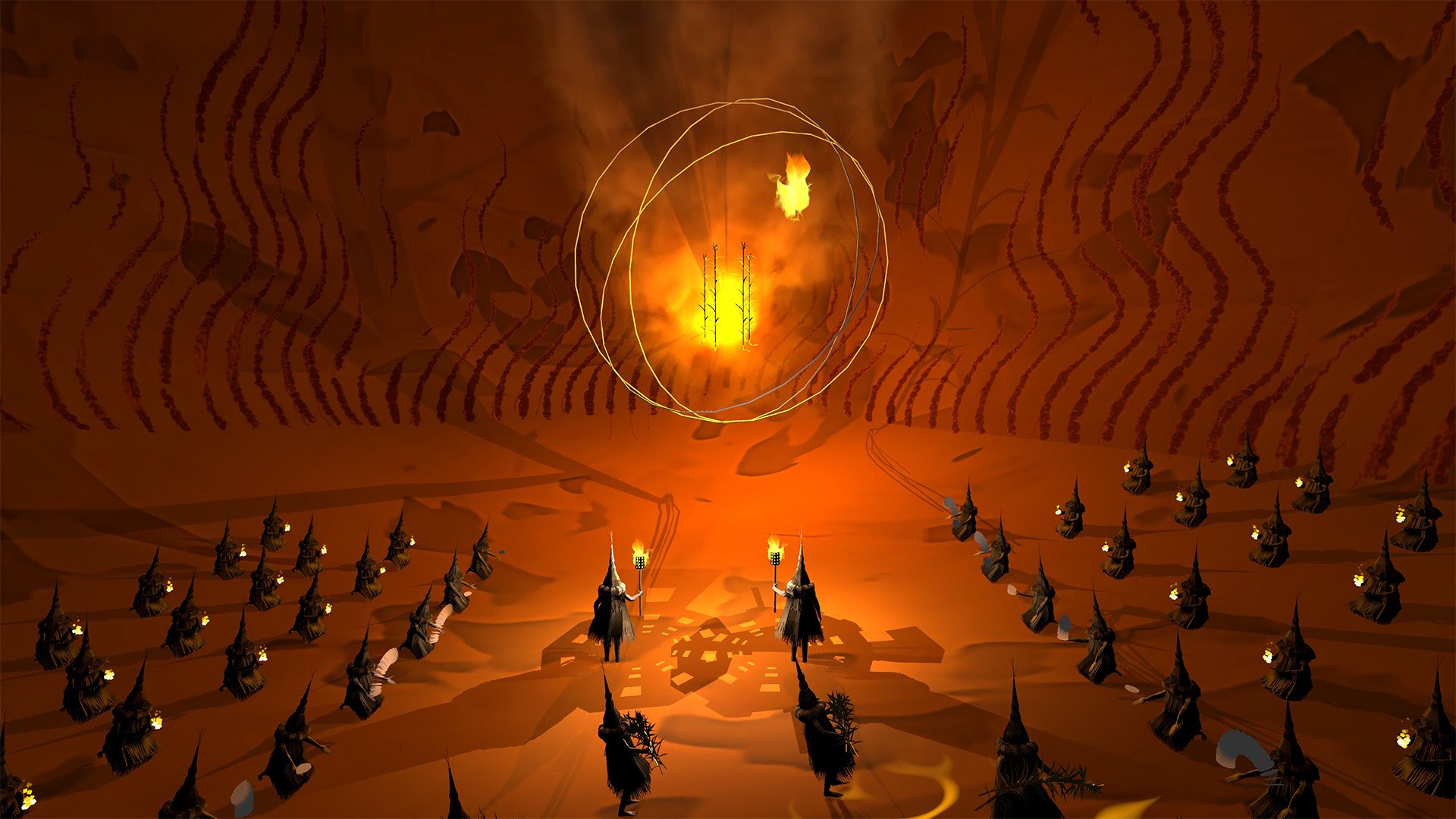
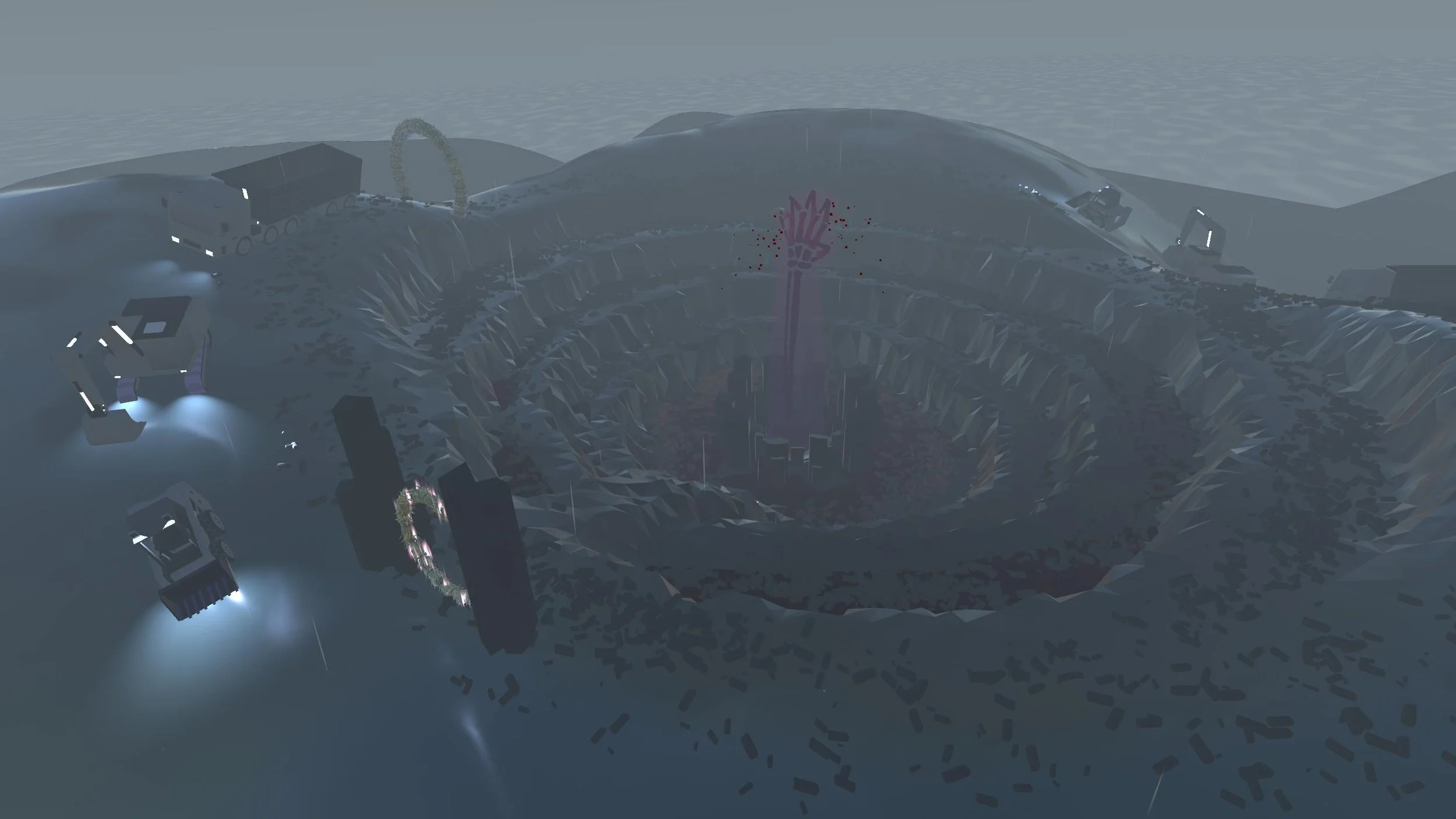
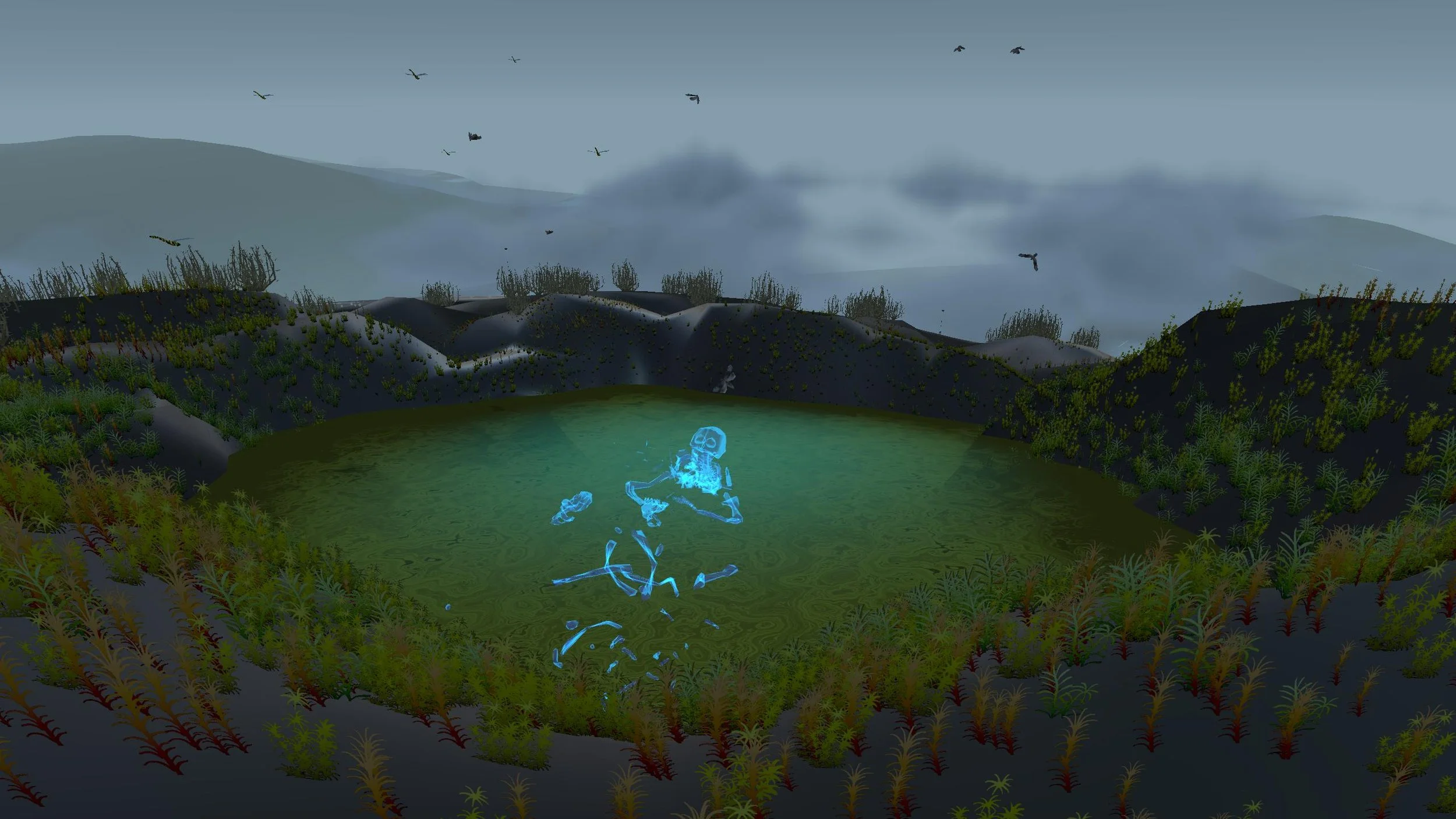
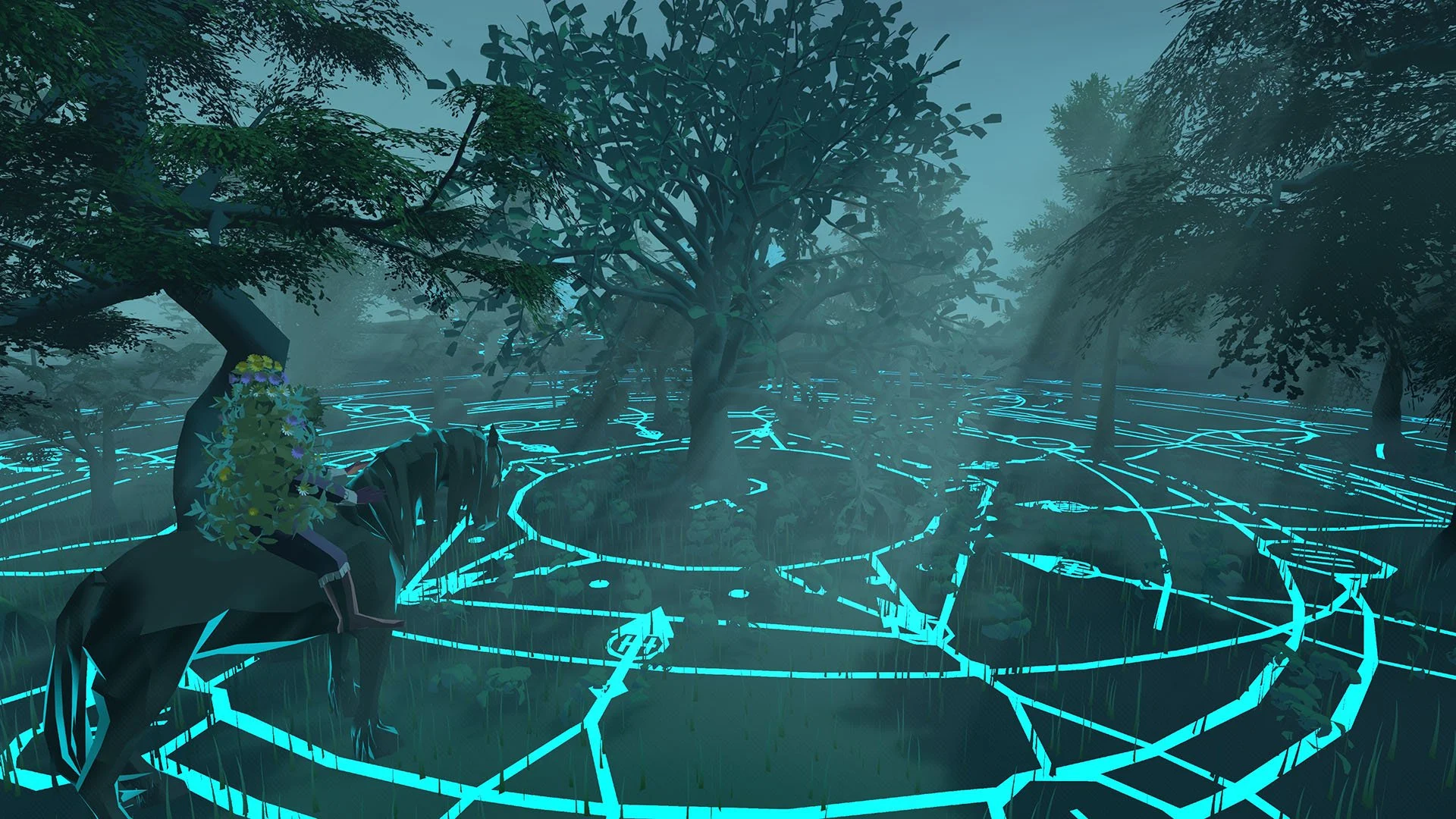
Each ritual examines the key role of more-than-human beings across five virtual environments: a stone circle in a basalt quarry, a labyrinth raceway pool churning with microbes and algae, a pyrolysis chamber in a miscanthus field, a haunted peatland, and an AI-plotted woodland. Viewers’ presence and participation are required to move these slow ceremonial experiences forward, which condense natural rhythms of algae, bacteria, fungi, crops, trees, and rocks into human timescales.
These rituals are positioned as part of a crucial cultural shift, which imagines how sacred places and practices can reorient human motivations toward long term ecological stewardship. They propose a future where the biosphere and technosphere converge to reawaken a lost kinship with the earth and combat the climate crisis.
Trailer
Credits
Artist: Yambe Tam
Software Development: Albert Barbu
Music Composition: Dr. Seán Clancy
This work is supported by the CO2RE Hub, funded by the Natural Environment Research Council (Grant Ref: NE/V013106/1). Additional support by Broadway’s Near Now using public funding by Arts Council England.
With thanks to Natasha Martirosian, Mikal Mast, Emily Cracknell, and Paul Rouse.
Research Consultants:
Dr. David Beerling FRS FLSW, University of Sheffield
Jonny Ritson, University of Manchester
Lucas Coppens, Imperial College London
Dr. Rodrigo Lesdama Amaro, Imperial College London
Dr. Judith Thornton, University of Aberystwyth
Colin Snape FRSE, University of Nottingham